Main Privacy Policy DMCA Contacts
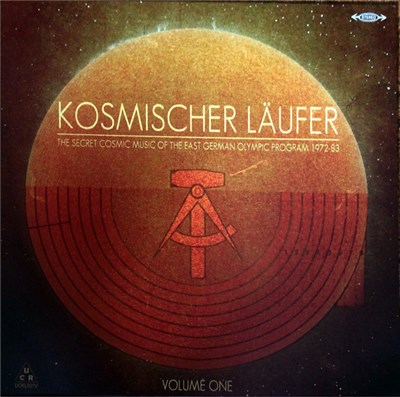
» » Kosmischer Läufer - The Secret Cosmic Music Of The East German Olympic Program 1972-83 - Volume One

Kosmischer Läufer - The Secret Cosmic Music Of The East German Olympic Program 1972-83 - Volume One download mp3 flac
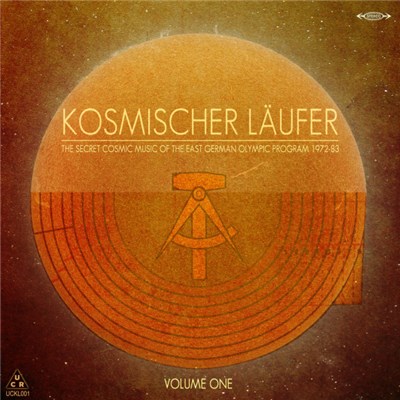
Kosmischer Läufer - The Secret Cosmic Music Of The East German Olympic Program 1972-83 - Volume One download mp3 flac
Performer: Kosmischer Läufer
Title: The Secret Cosmic Music Of The East German Olympic Program 1972-83 - Volume One
Country: UK
Genre: Electronic / Rock
Style:Ambient, Krautrock
Released: 03 Jun 2013
Catalog number: UCKL001
Label: Unknown Capability Recordings
MP3 album szie: 1457 mb
FLAC album size: 2499 mb

Tracklist

1 Zeit Zum Laufen 156 2:56
2 Sandtrommel 6:26
3 Die Lange Gerade 13:07
4 Tonband Laufspur 6:32
5 Ein Merkwürdiger Anschlag 2:49

Versions

Category Artist Title (Format) Label Category Country Year
UCKL001 Kosmischer Läufer The Secret Cosmic Music Of The East German Olympic Program 1972-83 - Volume One ‎(5xFile, MP3, MiniAlbum, VBR) Unknown Capability Records UCKL001 UK 2013
UCKL001 Kosmischer Läufer The Secret Cosmic Music Of The East German Olympic Program 1972-83 - Volume One ‎(5xFile, MP3, MiniAlbum, 320) Unknown Capability Records UCKL001 UK 2013
UCKL001 Kosmischer Läufer The Secret Cosmic Music Of The East German Olympic Program 1972-83 - Volume One ‎(5xFile, ALAC, MiniAlbum) Unknown Capability Records UCKL001 UK 2013
UCKL001 Kosmischer Läufer The Secret Cosmic Music Of The East German Olympic Program 1972-83 - Volume One ‎(5xFile, ogg, MiniAlbum) Unknown Capability Records UCKL001 UK 2013
UCKL001V Kosmischer Läufer The Secret Cosmic Music Of The East German Olympic Program 1972-83 - Volume 1 ‎(LP, Album, RP, 180) Unknown Capability Recordings UCKL001V UK 2017

Credits

  • Written-ByMartin Zeichnete

Notes

Liner Notes:
This program should allow the average runner to complete a 5 kilometre run at a reasonable pace. Included are 3 minute warmup and warm down pieces.
This program was used by the East German Olympians in the 1970s.

--------------

Incidental info:
Comes with a 3 page digital booklet (pdf).
Tell friends!

Related to Kosmischer Läufer - The Secret Cosmic Music Of The East German Olympic Program 1972-83 - Volume One
Reviews: (8)
TheSuspect
TheSuspect
Don't miss the repress ! It will most likely be repressed again this year (i guess), but waiting another 6 months is too long for this beauty :)
The_NiGGa
The_NiGGa
Pre-orders are now available for a January LP repress at the artist's bandcamp https://kosmischerlaufer.bandcamp.com/
Arlana
Arlana
Repress is up for pre-order now.http://kosmischerlaufer.bandcamp.com/album/volume-one
Cashoutmaster
Cashoutmaster
Reprise ont the way ! Should be available in March.
Onnell
Onnell
Please repress ! Need !
Grarana
Grarana
A vinyl edition has been proposed, see the details of how this will come together here: http://www.kickstarter.com/projects/1666381126/kosmischer-laufer-volume-one-ltd-edition-vinyl-alb?ref=liveThe funding period is from Jul 8, 2013 - Aug 6, 2013 with shipping (hopefully) by September 2013.
Xal
Xal
Taken from the digital notes:UNKNOWN CAPABILITY RECORDINGSAn Interview with Martin Zeichnete. Berlin. February 2013.Q: Hello Martin, we'll start at the beginning I suppose. Where did you grow up?I was born in Pesterwitz, which is near Dresden, in 1951. Before the war my parents had been teachers. Afterwards my father worked for the FDGB and my mother sometimes gave music lessons.Q: Where did you begin your music career?My first job was as an apprentice sound editor for DEFA, (Deutsche Film-Aktiengesellschaft), in the Trickfilme (Animation) department in Dresden. I learned techniques in tape editing and 'special effects' which I would put to good use later on in my 'invisible' career. Perhaps because we provided music for animated film we managed to sneak in some avant garde ideas that would not be tolerated elsewhere. Some of us saw it as a game. Between us and the state censors.Q: Tell me about the music that inspired Kosmischer Läufer?Although we were of course aware of popular Western music at the time, very little was available to us. Our primary source came from radio stations broadcasting from the West. Due to the geography of the area this proved difficult in Dresden! There was a station I could get from Düsseldorf that played Kosmische Musik , you know, Kraftwerk and Cluster and Neu! and so on. To me, sitting in the attic tuning the radio dial, searching for anything, hearing these beautiful new electronic sounds, it did seem like music from the cosmos. I would record it and pass tapes on to my friends. We did have people in the East doing electronic music, such as Paul-Heinz Dittrich, but I found their version of it all too studious. The music from the West was fun. It had energy.Q: How did the idea come about?I was a keen amateur runner and when out I would play these motorik, repetitive songs in my head. I thought somehow it could be used as a training aid for athletes. The electric pulse sort of thing. I thought it could benefit the athletes mind as well as body, the music would be hypnotic, it would bring focus. Then at work I was shown a prototype design of Andreas Pavel's 'Stereobelt' and I knew this could be possible.Q: So how does it go from an idea to a reality?It was not in a good way! I shared my ideas with colleagues at work but as was often the case in those times I perhaps spoke in front of the wrong person. One day at the studio two SED members arrived and took me away in an official car.Q: What did you think was happening?Well. I didn't know, you think of everything you have said, everyone you have said it to, but I think I knew it would be about the music. I feared I would lose my job, at the very least. It would be very bad for someone who worked on party films to be seen to be influenced by the enemy, you know, Western culture.Q:Where were you taken?We drove in silence to the outskirts of Berlin to what I later found out was an athletics camp. They knew all about me and my idea. They questioned me about the concept for hours then left me alone in the room. Later an official from the Nationales Olympisches Komitee came in and told me I would begin to work on the project immediately.Q: Just like that! It seems very matter of fact?Yes, I was stunned, but sometimes that is how things happened then. We know now that the athletic directors were trying anything to gain an advantage in those times. At least my idea did not harm the athletes. I was in a studio in Berlin the next day.Q: Did you work alone or with other musicians?To begin with it was just myself, the engineer and always a state official who would sit in the corner observing. The first things I tried were basically electronic metronomes at various paces with very little melody. These were tested but the athletes didn't respond very well so I began writing more 'musical' pieces. Sometimes I would be joined by a drummer and a guitarist. It was incredible, when I would explain to the musicians what we were going to do, you could tell immediately the ones who 'got' what the music was. We would be in the live room doing 20 minute space rock pieces while a government official sat bored on the other side of the glass. It was surreal.Q: What equipment did you have access to?It varied. We had some Western technology in effect units and such but the synthesizers were mostly Soviet in origin and could be very temperamental. The studio in Dresden had a Subharchord which I had used before on animation soundtracks, it was a great machine. I filled in many claim forms for equipment. Sometimes it came, sometimes it didn't. The Moog didn't. I do know that the athletes in the program were probably the first people in the East to have Walkmen as I saw the order for 300 units.Q: Did you ever meet the athletes?Not really at the time, always there was a minder there when I met with them and the coaches to discuss what they needed. It was a shame, they were my only audience. Years later, after reunification, one former Olympian I met confessed to me that he would try and swap the training cassettes supplied to him for Western music at international meets.Q: How long did the project continue?I would be summoned to Berlin generally in the winter to produce tracks for the upcoming athletics season. The last work I did was in 1983 doing pieces for the gymnastic team's floor performances. The project stopped as suddenly as it had started. I was given no explanation. I think it may have been due to the boycott of the Los Angeles Olympics.Q: How did you retain the music?Well, I was not supposed to take the music from the studio as it was state property but I did manage to sneak a lot out. I thought the master tapes had been destroyed or lost in the chaos after the wall came down but one of the engineers, who 'got' it, had rescued a lot of them. We transferred them to digital in the early 90s.Q: Why release this now?I made this music for people to train to. Because of the time and place I did it only a select few got to use it. I would like for more people to finally use and enjoy it. It is as simple as that.Kosmischer Läufer Volume 1 - The Secret Cosmic Music Of The East German Olympic Program 1972-83 is released by Unknown Capability Recordings on the 3rd of June 2013.contact: [email protected]: kosmischerlaufer.bandcamp.comlike: facebook.com/kosmischerlauferfollow: @KosmischerL
Balladolbine
Balladolbine
Probably the best hoax in years! "Our primary source came from radio stations broadcasting from the West. Due to the geography of the area this proved difficult in Dresden! There was a station I could get from Düsseldorf that played Kosmische Musik , you know, Kraftwerk and Cluster and Neu! and so on." - Oh yes! Gee, that IS a magnificent story. Unfortunately "Kosmische Musik" never got a lot of airplay and therefore I think it is highly unlikely that someone in the GDR was listening to it back in the 1960s/70s. "Professional journalists, people with good reputations, people more experienced and wary of such matters, and not blogging dabblers like me, had obviously done their homework and checked out the names and history of the recordings. And found a big fat zero in terms of actual, authentic proof that these recordings were what they said.And apparently – if you want to buy the files, payment goes to a gentleman who is a member of Scottish 'Krautrock' band The Magnificents." (Quote from http://www.incendiarymag.com/fallfromgrace/krautrock/incendiary_get_taken_ride_kosmischer_la%C3%BCfer)