Main Privacy Policy DMCA Contacts
» » Petri Kuljuntausta - Momentum

Petri Kuljuntausta - Momentum download mp3 flac
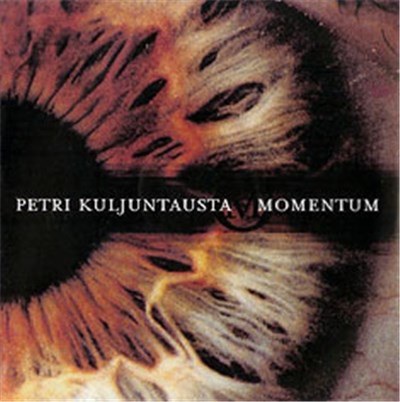
Petri Kuljuntausta - Momentum download mp3 flac
Performer: Petri Kuljuntausta
Title: Momentum
Country: Finland
Style:Abstract, Drone, Experimental
Released: 2004
Catalog number: 3AB-0103, CSR-0303
Label: Aureobel, Charm Of Sound
MP3 album szie: 1705 mb
FLAC album size: 1773 mb

Tracklist

1 Canvas 10:18
2 Violin Tone Orchestra 4:33
3 Four Notes 7:33
4 When I Am Laid In Earth 7:03
5 Freedom 8:58
6 Momentum 6:10
7 In The Beginning 12:45

Credits

  • ArtworkM.K. Perkiökangas
  • Composed By, Liner NotesPetri Kuljuntausta

Barcodes

  • Rights Society: n©b
  • Rights Society: TEOSTO

Companies

  • Copyright (c) – Petri Kuljuntausta
  • Phonographic Copyright (p) – Petri Kuljuntausta
  • Recorded At – Meadow Path Studio, Helsinki
Tell friends!
Related to Petri Kuljuntausta - Momentum

Reviews: (1)
blac wolf
blac wolf
Part 2/2

Freedom (1998) is yet another work that gives color the central role, but it is unique among the other pieces on this CD in that it focusses less on isolated overtones, and more on the beating produced by harmonic relationships between various pitches. A low pedal A is established near the beginning as a sort of ominous drone from which the texture is not allowed to escape, until the end when it finally escapes by stepping up to B. As other pitches are set against this pedal, beatings result in the pedal itself so that it “grumbles.” This is yet another work where Kuljuntausta creates a sense of timelessness due to a lack of harmonic progression; one gets the impression that the composer intends these pieces to be seen as “meditative escapes,” where a given concept is evident from the start and has only to be experienced (less thinking, more feeling). In this sense, it is not so important that the listener be present for every moment of the piece, though doing so would allow the full meditative experience that Kuljuntausta envisions.

Counterpoint plays a major role within Momentum, which suggests a trend on the part of Kuljuntausta towards referencing music of the past (remember his reference to the medieval period in Canvas). In the course of this piece string samples are contrasted with an electric guitar patch, these timbres being subtly altered to produce vague shades of color, or ghostlike effects. As one might suspect from the work’s title and contrapuntal texture, a subtle sense of direction does present itself in the form of a gradual shift from simple two-voice counterpoint to a more complex web of contrapuntal lines. In this way, Momentum stands apart from its peers by virtue of taking more care in the process of getting from “here to there.”
In the Beginning (2001) is a provocative reference to the first chapter of Genesis. Again, the composer uses string quartet samples, but this time they are presented as a slow moving backdrop against which other sampled sounds are set. These samples include city noises such as traffic and trains, coupled with natural sounds such as birds and wind. The composer is still interested with the integral components of the string quartet sample, magnifying particular harmonics or other pitches, but these are not so invasive as in the other pieces.

The quartet samples are subservient to the other sampled sounds, much like the string ensemble in Ives’s Unanswered Question is a backdrop against which the proverbial question is asked. As may be expected, In the Beginning moves at an incredibly slow rate of speed, (if it can be said to be moving at all); listening to the piece is like sitting in Golden Gate Park on a sunny afternoon, experiencing the curious conflict between the urban and natural worlds.

Kuljuntausta does not present the listener with an endless variety of stimuli, but chooses instead to focus on the variety that is contained, (though often overlooked), within limited sources. His music offers the listener an opportunity to explore the many possibilities inherent to these sources, and to briefly step back and appreciate the beauty of “common” sound. In this light, his CD is a great success, and deserves the consideration of every serious appreciator of computer music.

— Robert Denham, Array | ICMA (International Computer Music Association)